mister darista

Professor Robert D’Arista died on Monday, October 12.  I don’t know the cause.  I haven’t seen the man since I took his drawing class last year, except for once, about a month ago.  We were walking in opposite directions in the School for the Arts.  Happy to see him, I said, “Hi!”  He returned my greeting with some uncertainty and much less exuberance.  I don’t think he remembered me.

That was the last time I saw him.

Robert D’Arista, or “Mista” D’Arista, as I liked to call him, was not the picture of physical health.  He was overweight and his clothes, ill-fitting.  He was a heavy smoker, which may have been the cause of his almost inaudible voice–quiet, but not weak.  His black hair was oily and messy, as were his bushy mustache and eyebrows.  One of his eyes seemed permanently squinted, as though he were always aiming.

To me, he looked just like an art professor should look.  To me, he looked perfect.

As we drew, he would circle the room.  When he saw something he liked, he would instruct the student to tear the picture out and put it in a pile.  You could generally tell how well you were doing by how unruly your sketchpads were.  This practice bothered the compulsive part of me which didn’t like tearing things out.  More often than not, he’d tell us to do it while we were still drawing.  A typical exchange:

D’Arista: “All right, that looks good.  Put it in the pile.”

Me: “But I’m not finished yet.”

D’Arista: “What are you, a Communist?  Stop drawing before you ruin it.”

He was, of course, joking, but he didn’t smile.  I don’t think I can remember him ever smiling.  His expressions and gestures were slight, but like his voice, not without a certain power.


During the model’s breaks, he would discuss the selected drawings one by one, aiming that eye, speaking slowly and softly.  The class gathered around close and was silent in order to hear him.  It was an effort, but most didn’t mind.  Professor D’Arista knew his stuff, and we knew he knew.  His teaching was based more on encouragement than criticism.  Generally when he held up a drawing, it was to point out what he saw as good in it.

After he had finished praising a piece, he’d simply drop it on the floor and go on to the next one.  And so on, through the pile.  Often, without noticing, he let his cigarette ashes fall on the drawings or stepped on them.  It seemed outrageous to me given how most people regard art, but that’s what I loved about it.  I know he respected our work, but he did so without imposing on it the stifling seriousness that afflicts so much of the art world.  He gave us pride and humility, through nothing more than his unconscious honesty.

These may be my own projections.  I don’t know.  Whatever the case, I liked him.  He helped me along my way as an artist.  He gave, I took, and it was my privilege, not his.  That’s why I’m not bothered that he didn’t remember me.  And that’s why, Mista D’Arista, I doubt I’ll soon forget you.

(First printed in Boston University’s Daily Free Press, October 15, 1987)

January 4, 2003 – Today, more than fifteen years after I wrote the above, I got the following e-mail:

Hi Dan,

I am Luisa, Mista D’Arista’s niece. We found your letter while in Italy celebrating Christmas with the rest of the D’Aristas, his brother Vincent and sister Angie and my sister and brothers.  What a great letter!  I am sure he recognized and liked you very much.  Felice Anno Nuovo from all of us.

Con affetto,

Luisa

Is that cool or what?   I’m all choked up!  The internet is such an incredible tool.  There’s more than spam, porn, and spam for porn.  Thanks to whoever invented it, and grazie and a big Leo-Buscaglia-style hug to Luisa.

January 15, 2003 – What the hell?  Another D’Arista letter!  Check it out…

Dear Mr. Kaufman,
I met Bob D’Arista in 1949.  At that time, he was an art student commuting to school in Newt York.  I was an art student at a different school in New York.  We met on the train one day and he was sketching on a pad.  I  was very impressed.  We met many times thereafter and became good friends.  I finally asked him for one of his sketches.  He surprised me when he visited me at my home and brought a very large oil painting which I still treasure.
Your article about him touched me deeply and I wish I had maintained contact with him during his life.

I would like to get more information about Bob D’Arista and his works.  If you know where his son, Peter, can be reached, I would love to contact him.

Very truly yours,

Miriam

“Bob” eh?  That’s pretty funny.  He didn’t seem like much of a Bob when I knew him.  But he was once a skirt-chasing punk, just like me!  Aw!  “Bob”… I love it!  And of course I wouldn’t have been able to help Miriam find the family if Luisa hadn’t written me (just 11 days earlier).

more from d’arista’s students…

check out the new d’arista website

my clinton bit


I was surprised to find myself actually saddened by Bill Clinton’s confession Monday night.  Why should I be?  It was no surprise.  We’ve known the truth all along.  Still, seeing him own up to it–and performing so poorly–somehow disappointed.  He was supposed to be so good at this.  Where were the phony tears?  Where was the artful dodger we elected?

Why do we care so much about this whole affair?  Last week a couple of kids, ages seven and eight, were arraigned for molesting and killing a girl.  That was a blip to us.  We don’t know those kids or their victim.  But the president is a character we’ve been following for a long time now.  We’re involved.  And his wife – did she know?  Does she care?  Will she leave him? And poor Chelsea.  It’s all so dramatic.

Times are good.  We’re not at war, we’re not hungry, most of us, and we’ve got money to piss away on booze and toys.  We’re safe and comfortable and a bit bored, and we could always use a good story to keep us interested in life, something to talk about.

Seven-year-old murderers, that’s a little interesting, but mostly it’s just a downer.  How does something like that happen?  Is it their peers, their parents, bad genes, TV?  And whatever it is, what do we do?  These kids are damaged goods and what happens when they and every other screwed-up kid grows up and has more kids?  These are stressful thoughts to dwell on.  We could sure use a distraction.

Pundits are mystified.  Why are Clinton’s approval ratings going up when he has done things we so disapprove of?  I don’t dispute the reasons everyone else is giving–the public/private distinction, a healthy economy–but there’s more to it.  People don’t mind that our commander-in-chief is dishonorable; I think we actually kind of like it.  It’s a relief.  Because if the leader of the free world can be a dunce, then we don’t have to feel so bad about being dunces ourselves.

Anyone out there with political aspirations, I’ve got some advice:  Don’t be an example of virtue.  We don’t want good examples; good examples make us feel guilty.  Just misspell potato or fall down or something.  Find yourself a niche.  Don’t give us hard truths.  We know we don’t have the will to solve the big problems.  Just be someone we can blame it all on.  And four years later we’ll flip the channel to someone else – new fodder for a new round of email jokes.

People used to ask, why did George Bush pick someone like Dan Quayle to be his running mate?  And many concluded, because Quayle made Bush look smart.  But what George Bush never realized was that’s why we picked him.

We’re here, we’re alive a little while, then we’re gone.  What should we do with these moments?  We’ll just follow our impulses.  It’s all meaningless anyway.  Live for the moment.  Forget the troubles around us and ahead of us.  We’ll care about the stuff that’s fun to care about, and we’ll drink and watch TV and laugh, and if a young girl not our wife offers us a blow job, what the hell, we’ll take it.

 – August 18, 1998

religion explained

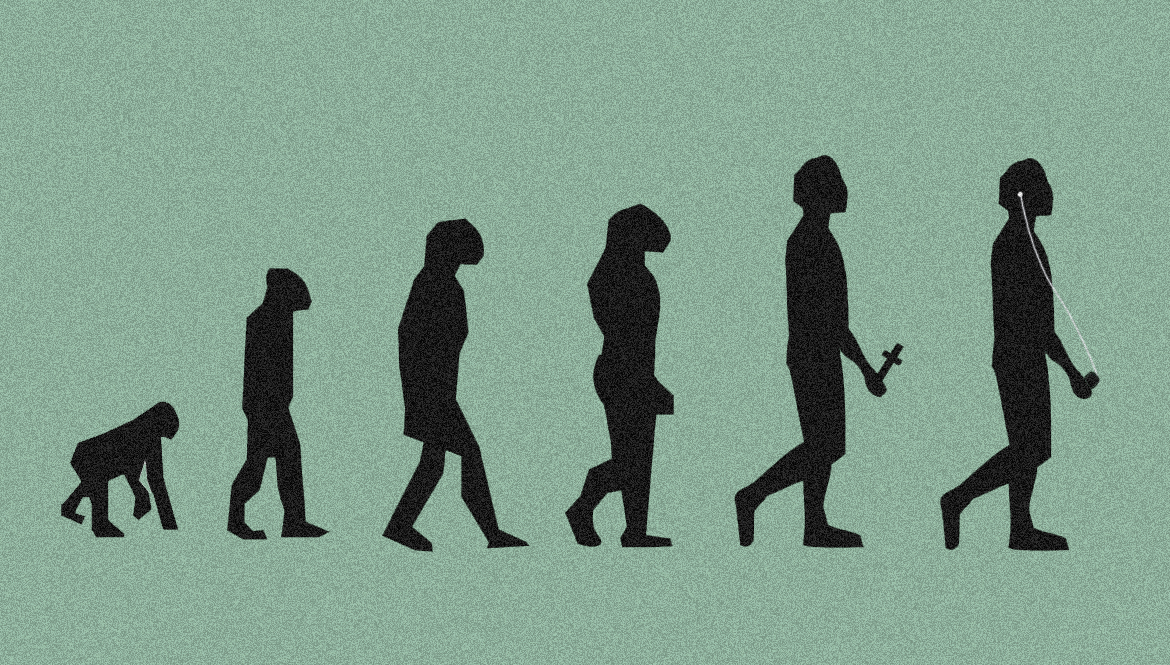
I love thinking about evolution. It explains so much, not just about how we’re built, but how we think and feel.  After millions of years of it, we find ourselves living in the modern world guided, and misguided, by traits that were formed in the wild.

Take our fear of death (please).  Evolution makes it easy to understand.  Those creatures who did not fear death (who didn’t value themselves) did not do enough to avoid it.  They were constantly jumping off cliffs or eating fire or mouthing off to creatures much bigger than them and so made their kind extinct.  What survives and endures, then, is largely fearful (and egoistic).

Even with a healthy survival instinct, death is inevitable, and it’s all around.  Once our intelligence evolved enough to make the mental leap from the death of other creatures around us to the anticipation of our own death, we were left with awareness of a threat we had been bred to be terrified by.  No one can function in a constant state of terror, so people naturally had to dream up ways to shut out the bad news nature kept bringing.  The dreams were many and varied—ghosts, reincarnation, and finally, heaven—but they all said the same thing:

We will not die.  No worries.

So religion, which tends to deny evolution, is actually a result of it.

It was thousands of years more before evolution would begin to be noticed and understood.  Humanity is still overcoming its resistance to these simple, natural, but—because of the thinking they follow—revolutionary ideas.  The Scopes Monkey Trial may be the definitive story of our age.  I, writing this, am far from literate on the subject of evolution.  I was taught of God and Heaven long before Darwin.

Though some who value science are disheartened by the sway superstition continues to hold, it seems perfectly natural to me.  In the fight for our belief between what is and what we wish for, is it any wonder that truth has an uphill battle?  If anything, we should take pride in the great strides reason has made in the last two centuries, a minuscule period in human history.  Before this time, science offered little to compete with religion’s comforts.  Before science cured polio, religion at least helped us bear it.  What’s impressive is how many adherents science had before its fruits had ripened.  (Though back then, science did not as obviously conflict with religion.  Even Galileo believed in God.)

And the scientist’s pursuit of truth may come from motives as base as the mystic’s flight from it, indeed the very same motive – to conquer nature lest it conquer us.  It may be more with medicine and machinery now, and less with denial, but we’re still fighting death.

In the long run, religion may be seen as the temporary balm that helped us struggle on in the face of our fears until we had learned enough about nature to handle it with some facility; a necessary step in the ascent of human thought; not an enemy of science, but its vanguard.

June 6, 1998

Note: For a more nuanced discussion of some of these issues, try Freud’s The Future of an Illusion.  It’s dense, but rewarding.

to j.d. salinger

Dear Mr. Salinger,

It has been thirty years since your last published word, and nearly just as long of people wondering why.

Maybe you already told us.

In The Catcher in the Rye, published twenty years before you closed the door, Holden Caulfield says, “I swear to God, if I were a piano player or an actor or something and all those dopes thought I was terrific, I’d hate it.  I wouldn’t even want them to clap for me.  People always clap for the wrong things.  If I were a piano player I’d play it in the goddam closet… those dopes that clap their heads off—they’d foul up anybody, if you gave them a chance.”

And then there are Seymour’s last words before he shoots himself: “I have two normal feet and I can’t see the slightest God-damned reason why anybody should stare at them” he says of a befuddled stranger in the elevator who had no interest whatsoever in his feet.  It is a cruel paradox that the sensitivity that begets beautiful art often makes life unbearable for the artist.   We can at least be grateful you have chosen a gentler escape than Seymour or Van Gogh.

I am not brave enough to offer any specific applause for your writing, but I do want to thank you.  I remember reading a book of yours on the train to work, having to stifle the urge to miss my stop and spend the day just reading and riding, having to force myself to close the book and get off.  I went about my day, but for a long time after I stopped feeling the train’s momentum, I could still feel yours.  I believe I still do, softly, and I believe I am better for it.

That’s all.  I do not consider your work sacred, or you a guru.  Truthfully, I do not think of you much at all.  I want nothing from you but more, and if I could get that without involving you, I would, believe me.

I expect this sort of appeal disturbs you.  For Raise High the Roof Beams, Carpenters and Seymour, an Introduction you wrote the following dedication: “If there is an amateur reader still left in the world or anybody who just reads and runs, I ask him or her, with untellable affection and gratitude, to split the dedication of this book four ways with my wife and children.”

I am not sure what you mean by amateur reader, but I know I do not read and run.  When I find authors I like, I get greedy.  I devour their work, and I look for more.  Sometimes I find that I ought to have moved on sooner –  they decline or I outgrow them.  I may reach that conclusion with your work, but I’d still like to find out.  I’m telling you I love good writing as much as anything life offers.  I do not read and run.

And neither do you.

In fact, in the very book that offers the above dedication you include a long quote by Franz Kafka, and then explain, by way of Buddy Glass, how Kafka is one (and Van Gogh another) of a handful you run to for their wisdom on art.

For the dust jacket of this book you wrote “I have several new Glass stories coming along…” and in the decades since, you have reluctantly confirmed more than once that you continue to write.  Your readers, for a long time now, have had cause to hope for more.  But it occurs to me that Kafka, whom you esteem so highly, intended that his unpublished work be destroyed, never read, and I worry you intend the same.

At the risk of being indelicate, I have been prepared to wait out your life for the balance of your work.  Born long after you, I figure I can afford to be patient.  If applause disturbs you, then keeping your audience at a distance seems reasonable, and not at all arrogant or deranged.  But destroying your work, I find unreasonable, and unkind.  If you disagree, please consider how grateful you are that Max Brod betrayed Kafka by publishing his work instead of burning it.

Won’t you do the world the same favor, Mr. Salinger?  You cannot be the only human with any sense or decency.  We cannot all be clapping at only the wrong parts.  On behalf of the few who get it right—though I may not be among them—please, leave us the rest.

With hopeful gratitude,

Daniel Kaufman

P.S.  Nobody is looking at your feet.

April, 1995


talking israel


Recently I received an email with the subject line “Dennis Miller’s rant on the Middle East crisis”.  Maybe someone sent it to you.  If not, and you’re curious, you can read Miller’s piece in its entirety here.  If you go, you’ll see the author is actually comedian Larry Miller  (a funny comic and by all accounts a nice guy).  Maybe whoever started sending this around thought Dennis Miller would get more interest.  Or maybe it was an honest mistake.  Regardless, I had problems with the article.  There are plenty of good arguments against the way Palestinians have handled the current dispute.  I saw none in Miller’s column.

A few points:

“There are no Palestinians.  It’s a made up word.”

So was “Indian” as applied to the indigenous people of this country.  That doesn’t mean they don’t exist.  Nor does the fact that they didn’t have flags or lines drawn on maps mean that they weren’t wronged by Anglo-Saxons.

“…the Arabs haven’t given anything to the world since Algebra…”

What is the relevance of this?  What inventions have South African blacks given the world?  Some great music, at least, and probably more I’m not aware of.  But let’s say nothing.  Does that mean Apartheid was okay?  The argument is specious and racist.  So is painting all Arabs by the actions of the worst of them, which Miller does repeatedly.  It’s like saying he and I are the same as Yigal Amir.

“…just be done with it and kill everything south of the Mediterranean and East of the Jordan.  (Hey, wait a minute, that’s actually not such a bad id . . . uh, that is, what a horrible thought, yeah, horrible.)”

I don’t need to answer this, do I?  Just hyperbole, right?  Life is pretty cheap when it’s far away.  And death is easy to laugh at.  Especially when you’re angry and feel wronged.  Which is just how planes come to run into buildings.

I would prefer to fight indiscriminate hatred and violence, not Arabs.  It’s our instinct to fight people rather than concepts and attitudes.  It’s a caveman impulse, and I’m not completely immune to it.  Like right now I want to call Miller an oaf, dressing up hateful grunts with glibness to make them seem wise.  But Miller’s not the enemy.  Nor are others of his religion or ethnicity or nationality.  The enemy is ignorance, lazy thinking, the gut ruling the head.  And trampling the heart on its way.

– May 15, 2002

Part 2

The latest false-attribution pro-Israel email (edited) and my reply…

Brian De Palma – Movie Director says:

“There are only two motives that audiences really buy: sex and money. That wise advise [sic] has stayed with me and served me well throughout my screenwriting career. Which brings us to former President Jimmy Carter. Everyone is running around trying to figure why he’s spending so much time bashing Israel. … Well, to clear up the confusion, just cruise on over to the website of the Carter Center and take a look at the list of donors who have contributed more than a million dollars. What a shock, what a rogues gallery: Prince Alaweed bin Talal, the Sultanite of Oman, Sultan Quobos bin Said al Said, The Kingdom of Saudi Arabia,…. As Jimmy Carter makes the rounds of the various mainstream media news shows I’m waiting for one honest reporter to ask the former President this simple question: “Mr. President, are you a paid agent of Arab jihadist governments?” Yeah, that’ll happen.”

Only the first sentence of this quote goes to the famous movie director (and supposed neutral third party) Brian De Palma.  The rest of the paragraph belongs to screenwriter Robert J. Avrech, who describes himself on his website as “an observant Jew, a religious Zionist, a fierce conservative Republican, and a member of the NRA.”  There you can find Avrech’s blog and the original quote that was misattributed in later email forwards. Someone along the way must have decided their cause was more important than truthfulness, and not considered the plausibility of an Italian-American schlock movie director passionately defending Israel.

Attribution issues aside, this paragraph contains not a single mention of anything Carter has to say about Israel.  It is dense with examples of various logical fallacies, including:  Appeal to authority (see also therein, “False Authority”), Ad hominem, Association fallacy, and False Dilemma, the last of which makes people like Avrech see the world as a choice between one of two black and white extremes – Zionists/terrorists, supporters of Israel/anti-Semites, good Jews/self-loathing Jews, etc.

To the degree we live in that world, there is no need for reasoned argument and no hope for progress.  There is no why or how, only what side am I on, who do I love, and who do I hate?  And for the answer to all, we need only check our last names, get in line, and hope there are any of us left when the other side is completely wiped out.

Yours in the nethers,

Daniel

P.S. On the Carter center site list of supporters, there appear to be as many Jewish names as Arab, which I guess either makes Carter a double-agent, or those Jews hypocritical, sell-out, terrorist-sympathizers.  Hey, Ted Turner’s on there!  I didn’t know he was a Jihadist agent!

 – January 24, 2007

stage fright


A young guy posted this on a comedy newsgroup:

> even the THOUGHT of getting on stage
> IN FRONT OF PEOPLE makes me nervous.
> Is everyone here really out-going? Or
> have people felt this way too??

Here’s my reply to him. It focuses on stand-up, but I think the issues are related for all performers, so just replace “comedian” with “performer” and “funny” with “good” etc. and reverse genders as needed…

A lot of stand-ups are shy introverts offstage (or were before comedy). Outgoing people tend to be happier and don’t have the desperate need for attention and affirmation that marks most good stand-up comics.

Growing up, my brother was the funny one at the dinner table. I just sat there. He got tons of attention and now he’s a computer programmer. I got none and so now lead an exciting glamorous life. Which is better? Who knows?

Anyway, it sounds like you’re motivated and neurotic enough to make a fine standup. You will suck in the beginning because the fear will be paralyzing and you’ll be stiff and your fear will show and it will be painful and embarrassing. You will want to quit. You will feel worthless and talentless and unfunny and like you’ll never be funny.

But if you keep going up you’ll get less scared. As you relax and your confidence grows, you’ll do better. You’ll start to see stage time as something to enjoy, not just survive. You’ll have fun. Your writing will improve.

You’ll get club gigs. You’ll be scared at first and then learn to relax again. You’ll get better. You’ll move up to the middle spot. Women will start flirting with you after shows. Women who wouldn’t have given you the time of day if they hadn’t just seen you control a room for half an hour and light it up now will approach you. They‘ll be nervous to talk to you, and they’ll let you buy them a drink and maybe if you don’t blow it, they’ll come back to your hotel room with you and give you the physical pleasure. This will help your confidence even more.

You’ll work the road, traveling farther and farther from home. You’ll do festivals, industry showcases. Again, nerves may overtake you each first time, but you’ll learn to do well when the stakes are high. Soon someone will offer you a development deal. You’ll do Conan, Letterman… You’ll be terrified, but by now you’ll have the experience to make it work anyway.

You’ll get your own sitcom. It’ll rise to a top ten show and run eight seasons.

You’ll be rich. You’ll marry a beautiful woman 15 years younger than you.

You’ll do some shitty movies that bomb. You’ll go back on the road. Hot women will throw themselves at you and you’ll slip up now and then and cheat on your wonderful wife and feel like a heel. You’ll get tired of the road.

You’ll do some commercials. You’ll age. You’ll play a grown man’s father on another sitcom and have a small resurgence. That show will get cancelled. You’ll get old. You’ll do a commercial for arthritis medicine.

You’ll get a cameo in a movie starring some hot young comic, where you get to do something funny for an old person, like fight or break-dance or hit on a supermodel.

Friends and loved ones will die around you. You’ll get sad.

You’ll have a stroke. Your spoiled kids will put you in a home. You’ll learn to play cribbage. You’ll lose your mind. You’ll die. You’ll be cremated and scattered off a bridge somewhere and in a few generations no one will remember you were ever here. And in a few million years the sun will go supernova and the whole planet itself will be cremated and that will be that.

See? Nothing to be afraid of!

So get out there and have fun.

– 2004

don’t vote (2008)


I’d like to have a word with some of you voters before Election Day. Today, George W. Bush has around a 25% approval rating. In both his elections he got about 50% of the vote. This means about half the people who voted for him no longer like him. If you’re in this group, I’m writing to you. You now understand that you made a mistake. You had two chances to avoid the lesser candidate and both times you got it wrong. Isn’t it time to consider the possibility that you are just not very good at this voting thing?

       We all complain about the lousy job our President has done and the mess this country is in. But if you helped put Bush in the Oval Office, you need to accept some responsibility for what he did there. If you give a laptop computer to a monkey, and the monkey smashes it on a rock, it doesn’t make much sense for you to yell at the monkey. Even if the monkey reached out for it. Even if you asked the monkey, “Are you sure you know how to work this?” and he nodded enthusiastically.
I’m not trying to make you feel bad. There’s no point in beating yourself up. The issues of our day are complicated. Voting well is hard. It’s a skill, like anything else. You just don’t have it. And given that, maybe you should sit this next one out.

There’s no shame in being a bad voter. We’re all bad at something. At most things. I stink at gardening, chess, speaking French, and figure skating. Do I feel bad about it? No. I just avoid those activities.
I also stink at basketball.  In high school I didn’t even try out for the team. That didn’t mean I lacked school spirit.  I liked the team.  I went to games and cheered and rooted for them to win. I knew that the best thing I could do to help was to never touch a basketball.
“But,” You may object. “Don’t we all have the right to vote?” Of course we do. We also have the right to sing, but sit at any Karaoke night for a couple hours and tell me if you still think every right should be exercised by every person.
You probably see a lot of ads that say “Vote!” but those aren’t for you. Those ads are only meant for people who know how to vote. Just like Chevy ads are only for people who know how to drive.

Not voting takes no time at all. You can not vote right up until the end of Election Day. Even if you’ve moved recently. Even if your driver’s license has expired. There are many places to not vote so the lines are short.

I’m not saying you can never vote again. If you want to improve and work hard, I’m sure you can. But don’t start with a presidential election. That’s like trying a Rachmaninoff concerto for your first piano lesson. That’s not how it’s done. You start with Chopsticks and work your way up. So it is with voting. Start small. Maybe you and a group of friends can vote over what movie to watch. Did you pick a good one? If so try to pick an alderman or mayor. If your pick gets elected, watch them a few years and see how well you did. If it turns out you voted well, maybe move up to choosing a state legislator. Go slowly.
But for right now, just accept yourself as you are and take a break from voting. Next Tuesday, go straight home from work and watch the returns come in, secure in the knowledge that you did your part to not mess up the outcome. Be proud of yourself for being a good citizen. By not doing it a disservice, you will have done your country a great service.
I’m sure whoever is reading this to you will agree. And they and I and people all over the world offer you in advance our deepest gratitude.